
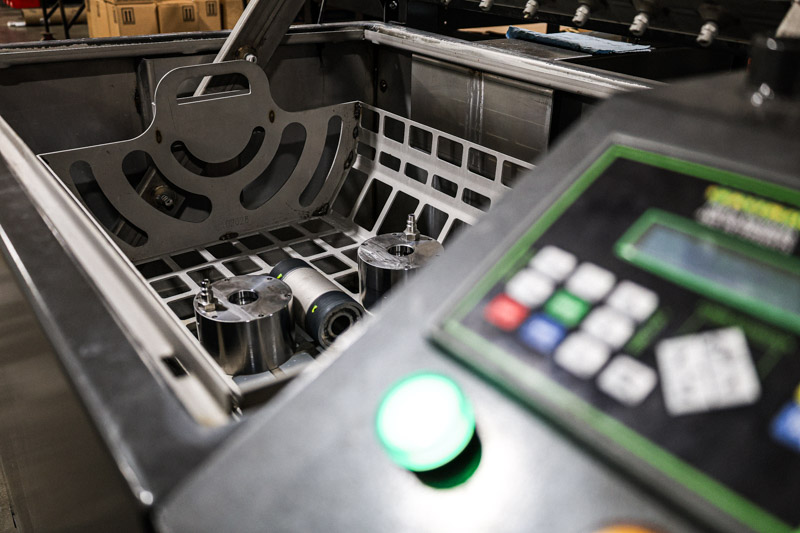
The Details That Protect Production – — and the Products You Stand Behind
By David Barney, President
One clean cycle is good. The real test is whether the washer can deliver that result again and again, load after load, shift after shift.
At Renegade Parts Washers, we strive for cleaning excellence within each shop. For high production shops, whether aerospace, automotive, or industrial manufacturing, consistent cleaning is not a luxury. It is vital to everyday operations. Inconsistent results can affect part quality, production throughput, and the reliability of finished products delivered to customers.
That is where production parts washing becomes more than a cabinet with heat, detergent, and spray. It becomes part of the process your team depends on every day.
We work closely with each customer to meet those demands. Many shops underestimate the importance of consistent cleaning, especially the first time they consider a parts-cleaning system. The difference is rarely the wash cabinet alone. It is how the machine is engineered around the part, the spray, and what happens after the soil comes off.
That is the component many people miss. Once the oil, chips, dirt, and manufacturing debris come off the part, the washer still has to control where that contamination goes next.
Consistent Cleaning Starts With the Details
Consistent cleaning does not happen by accident. It comes from understanding the part, the soil, the production volume, and the result the customer needs after the cycle is done.
Things to Watch For
- Nozzle positioning: How is the part actually being sprayed – and from which angles?
- Blind holes and chips: Do chips need to be blasted out of pockets and passages?
- Sump and debris management: What happens to the soil and manufacturing debris that falls off the parts and lands in the tank?
Those questions may sound simple, but they are often where the consistent cleaning difference is made. A production washer has to clean the part, protect the process, and keep the system from creating new problems downstream.
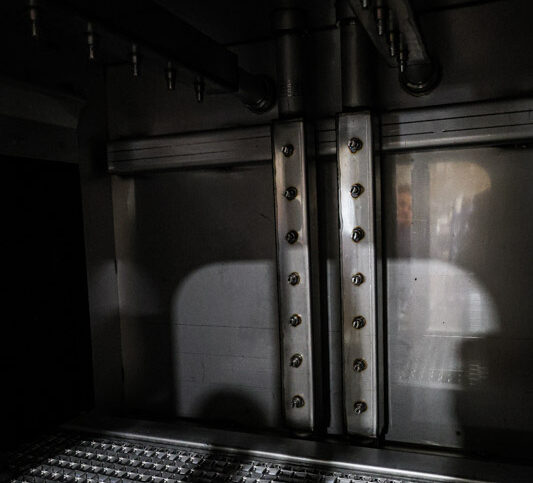
1. Nozzle Positioning Affects the Result
Spray has to reach the right surfaces with the right coverage. If the spray pattern is blocked, too far away, aimed at the wrong area, or unable to reach a pocket or passage, cleaning can become inconsistent.
That is why nozzle placement is not a small detail. It affects how the washer performs in real scenarios.
For production cleaning, the goal is not just to spray water at a part. The goal is to direct the cleaning process where it has to work every time.
2. Blind Holes, Chips, and Hidden Residue
Some parts are easy to look at but hard to clean. Blind holes, pockets, passages, and recessed areas can hold oil, chips, coolant, detergent, or rinse water.
That matters because a part can look clean on the outside while contamination remains trapped inside. If that part moves into assembly, coating, testing, or shipment, the problem may show up later, when it costs more time and money to fix.
In production, consistent cleaning has to account for the areas operators cannot always see. That may look like targeted spray, flush-through cleaning, filtration, part orientation, fixturing, or a machine design built around the part itself.
3. Don’t Recirculate Yesterday’s Dirt
If sediment settles in the sump, the pump can pick it up and put it right back on the part. This is a one-way ticket for a maintenance disaster – longer, costlier preventive maintenance (PM), and inconsistent results.
That is one of the fastest ways a cleaning process loses consistency. The washer may remove debris from the part, but if the system keeps that debris in circulation, the same contamination can come back through the pump, spray nozzles, and wash zone.
Renegade installs sweeping systems that continually sweep the sump during the cleaning operation. The pump then picks up that sediment as it enters the sump and sends it through a filtration system designed to meet production needs.
The goal is simple: keep debris moving out of the wash solution instead of letting it settle, build up, and create problems later.
Filtration Has to Match the Workload
Filtration is not one-size-fits-all. A shop cleaning light oil off open parts does not have the same need as a production operation washing heavy chips, coolant, sludge, or manufacturing debris all day.
That is why the filtration system should match the production need. It has to support the washer, the part, the soil load, the cycle time, and the maintenance plan.
Good filtration helps protect cleaning consistency. It also helps protect the pump, spray nozzles, heating elements, and the people responsible for keeping the machine running.
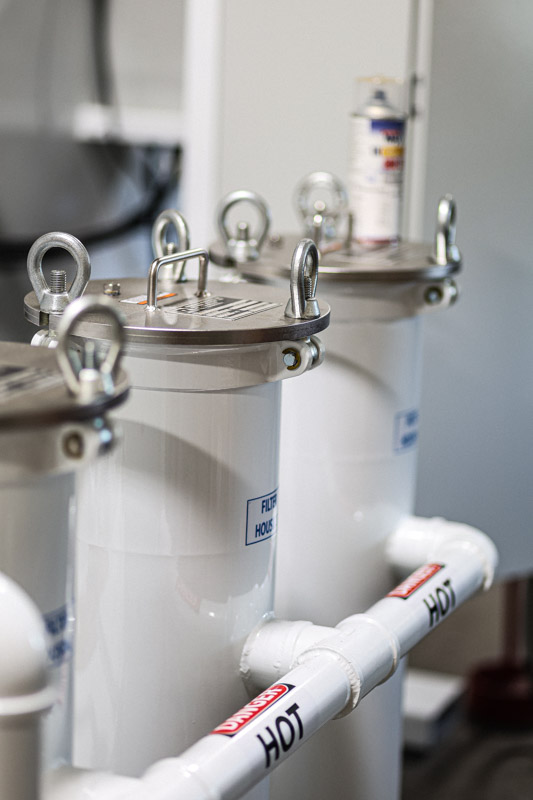
Filters and PM That Tell the Operator What to Do
When a filter reaches capacity, the operator receives a warning on the screen: Filter 1, Filter 2, or Filter 3 needs maintenance. This is not a warning to promptly brush aside. This warning turns maintenance into a visible, scheduled process instead of a who-changed-what-last guessing game.
Over time, the washer’s stored history teaches the shop’s usage habits – how often PM is actually required for the machine. Once the data is available, it can programmed it into the Programmable Logic Controller (PLC). In simple terms, the PLC is the control system that helps the machine track and communicate what on the machine needs attention.
After 10,000 parts, 20,000 parts, 50,000 parts – whatever the number is for your shop – the operator gets a PM prompt on the PLC. Preventative maintenance becomes scheduled work, not a surprise breakdown.
That is a big deal in production environments. When maintenance is planned, teams can schedule it around the work. When maintenance is missed, the machine usually finds a more expensive way to remind everyone.
Built for Decades, Not Just the Next Shift
Your washer should be built for the work it is expected to do long term, not just for the first week it lands on the floor.
Renegade designs and builds machines to withstand decades of use with minimal maintenance, fewer costly repairs, and less unplanned breakdowns. With the right maintenance and care, the goal is a machine that keeps doing its job without becoming something a team has to constantly manage.
Cleaning excellence is not a slogan. It is nozzle placement, chip evacuation, a clean sump, filtration matched to production, and a control system that tells the operator when to act – before cleaning problems affect product quality or reach the customer.
That is what consistent cleaning really means. It is not one feature, an entire system working together.
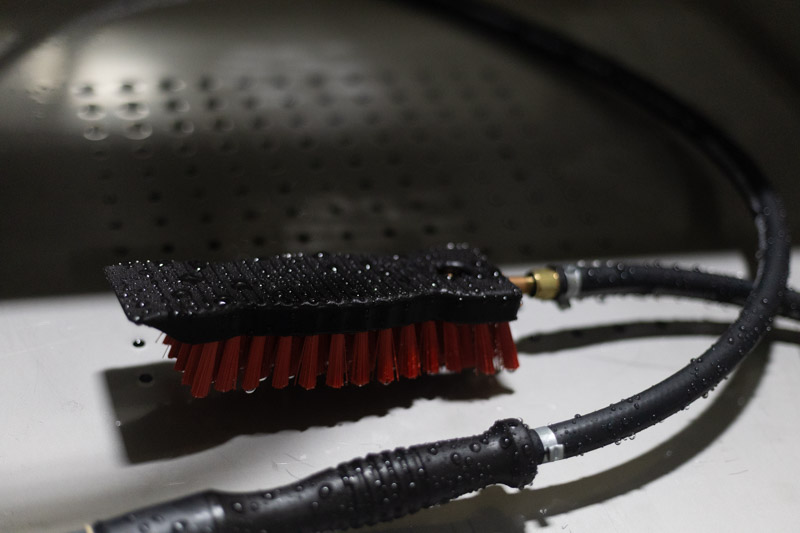
When Cleaning Problems Become Customer Warranty Problems
A part may look clean when it leaves the washer, but contamination left behind can create problems later during assembly, installation, or use.
What starts as a cleaning issue can turn into a product failure, customer complaint, costly repair, or warranty claim.
When manufacturers stand behind their products, consistent cleaning becomes part of protecting that commitment. Poor cleaning does not automatically create a warranty issue, but it can contribute to failures that manufacturers may be responsible for addressing.
The goal is simple: prevent cleaning problems from becoming customer problems.
Ready to Spec a System Around Your Parts and Production?
If cleaning consistency is affecting part quality, production throughput, maintenance needs, or confidence in the finished product, Renegade can help you look at the full process.
Talk with Renegade about the part, soil load, production volume, filtration needs, and the level of cleaning your operation has to maintain.