
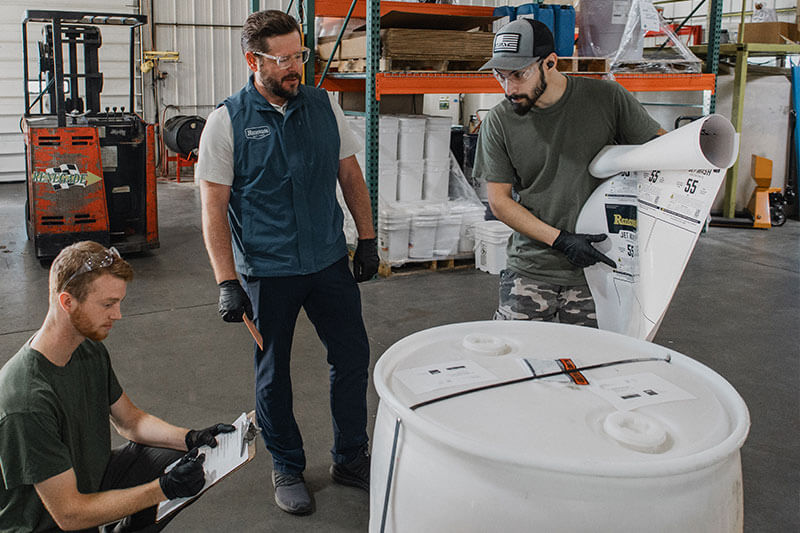
Featuring Tyler Stowers, Renegade Parts Washers, Customer Service & Technical Support
A parts washer can have the right pump, the right pressure, the right filtration, and the right cycle time. But there is still something else performing a lot of the work inside that machine: the detergent.
Parts washer detergent is not just soap added to hot water. It is a critical part of the cleaning process. The detergent, temperature, concentration, wash condition, and washer all need to work together to produce a consistent result.
So, what does “getting the chemistry right” actually mean? We asked Tyler Stowers, who works with Renegade customers on detergent and parts washer questions every day.
Start With the Right Detergent
When a customer calls and says, “I need detergent for my parts washer,” the first step is identifying the washer and application. For a Renegade customer, the serial number helps determine the wash system and likely detergent needs. For a different brand of washer, the important questions are whether it is automatic or manual, what is being cleaned, and what needs to be removed.
“Assisting in removing and not allowing re-deposits of soils on parts.”
— Tyler Stowers, Renegade Customer Service & Technical Support
That is the basic job of detergent. But automatic and manual washers create different cleaning environments, so the detergent needs to match the system.
Jet Wash vs. Parts Wash
Automatic Washers: Keep Foam Under Control
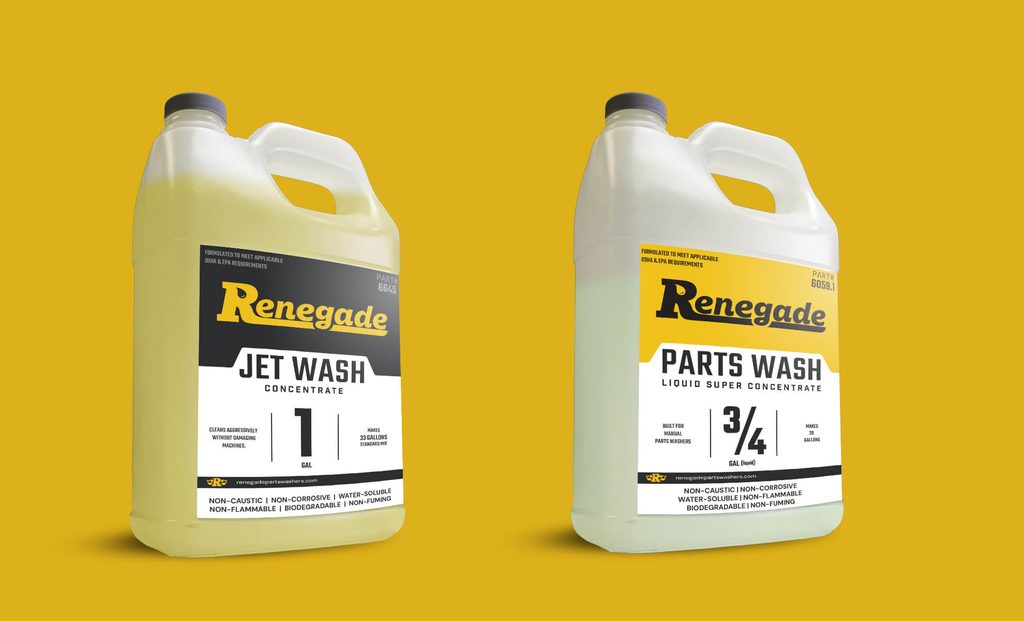
Automatic parts washers move heated cleaning solution through pumps and pressurized spray nozzles. In that environment, foam can interfere with the wash process. Renegade Jet Wash is formulated as a low-foaming detergent for automatic spray washing.
“Jet Wash is truly designed to work inside a pressurized spray manifold.”
— Tyler Stowers, Renegade Customer Service & Technical Support
That is why a detergent intended for manual cleaning is not a reliable substitute in an automatic spray washer. The chemistry needs to fit the way the machine is intended to clean.
Manual Washers: Built for Hands-On Cleaning
Manual parts washing is different. The operator is working directly at the washer, often using a brush or other cleaning tool instead of a pressurized spray system. Renegade Parts Wash is formulated for that hands-on cleaning environment.
The goal for each detergent is the same, clean parts, but each one is designed for different wash processes.
The Two Variables to Watch: Heat and Concentration
“Heat, concentration, time, and the mechanical cleaning capability of the washer are all variables.”
— Tyler Stowers, Renegade Customer Service & Technical Support
The following two variables are at the center of detergent performance, but cleaning results depend on the whole system working together.
Temperature
Jet Wash is designed to operate within an effective temperature range. If the wash solution is too cool, foam can appear and cleaning performance can suffer. Excessive heat is not automatically better, either. Depending on the material, chemistry, and wash time, too much heat can affect the part surface.
The goal is not the hottest wash possible. It is the right operating temperature for the application.
Concentration
More detergent does not automatically mean cleaner parts. Too much detergent can increase chemical usage and cost without improving the result while leaving behind residue. Too little can contribute to poor cleaning, foam, flash rust, or other performance changes depending on the application.
Start with the product label and manufacturer recommendation. From there, pay attention to the actual cleaning result. Shops that need stricter process control can also use methods such as titration or a refractometer to monitor concentration.
Let the Parts Tell You What Is Happening
“The first physical thing you’re going to see without any devices or any tests is if the parts are coming out clean.”
— Tyler Stowers, Renegade Customer Service & Technical Support
That is an important point. You do not always need specialized testing equipment to recognize that something has changed. Ask yourself:
- Are the parts coming out clean?
- Is the washer suddenly foaming?
- Are parts or the washer beginning to flash rust?
The answers to these questions may point you in the right direction and to the next section of this blog.
When Cleaning Performance Drops, Check the Whole Process
If a washer used to clean well and suddenly does not, the detergent may not be the problem. A recirculating washer continually reuses its wash solution, and everything removed from the parts becomes another variable the system has to manage.
Before assuming the chemistry has failed, check:
- Wash temperature
- Detergent concentration
- Whether the detergent feed or proportioner is working
- Filter condition
- Wash-solution condition
- Whether the soil load has changed
- Routine washer maintenance
Oil, grease, machine coolant, metal chips, and other solids all enter the wash solution. As contamination builds, it can affect the chemistry, filtration, pumps, nozzles, and overall cleaning process. Fresh detergent cannot indefinitely compensate for an overloaded wash bath.
The Simple Test
Parts washer chemistry can get technical quickly. But Tyler’s simplest description of a properly working detergent process may be the most useful one.
“There’s no foam, and the parts are coming out clean.”
— Tyler Stowers, Renegade Customer Service & Technical Support
Use the right detergent for the washer, get the solution to the recommended temperature, maintain the correct concentration, keep the wash and filtration system in good condition, and pay attention when the result changes.
Need Help Choosing or Using Detergent?
For a Renegade machine, have your serial number handy. For another brand of washer, be ready to share whether it is automatic or manual, what you are cleaning, what you are trying to remove, and what the washer is made from.
Shop Renegade detergents, additives, filters, and parts washer supplies at PartWasher.net, or call 800-774-7900 for help choosing the right product for your application.