
How you load a parts washer affects how well it cleans. Give the spray room to reach dirty surfaces and the wash solution a way to drain.
1. Leave room between parts.
Avoid stacking or nesting parts tightly together. Where one part covers another, it can block the spray. Split crowded loads into smaller batches when needed.
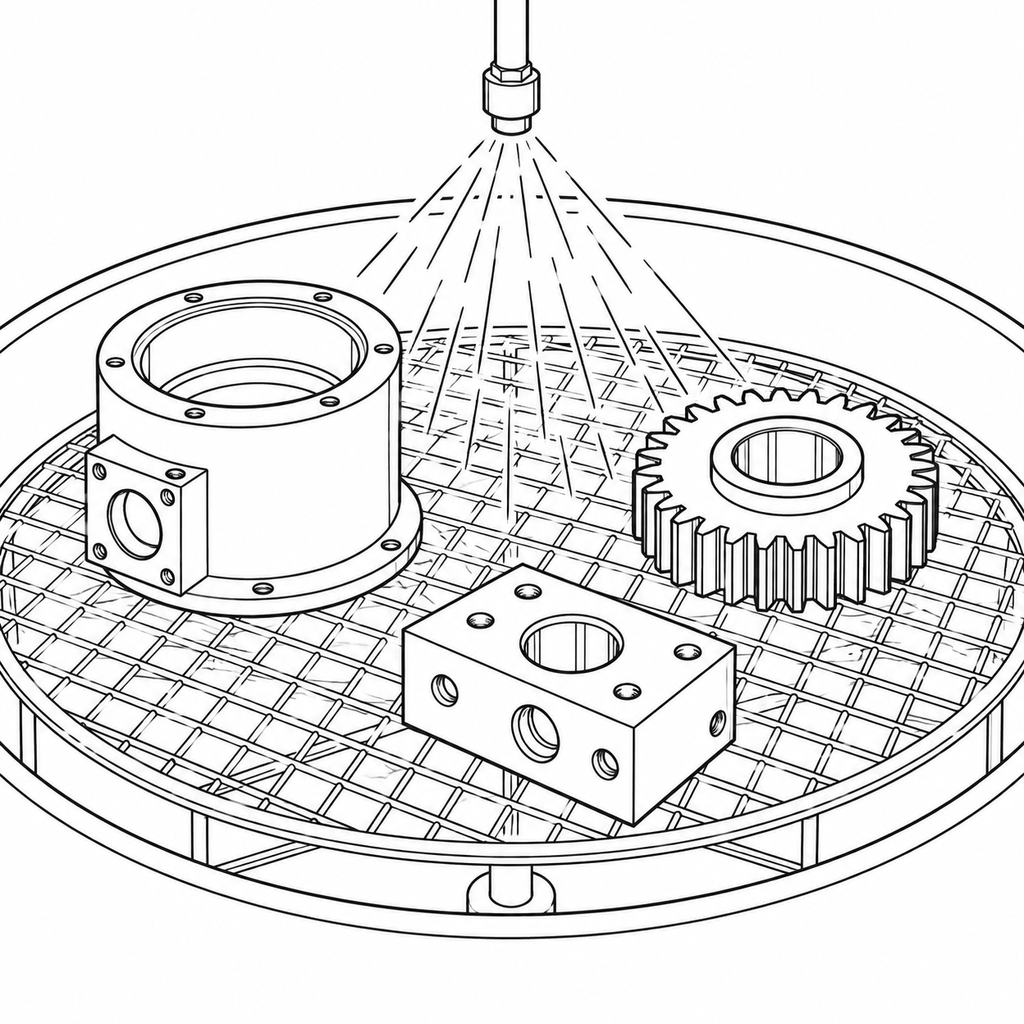
2. Face the dirt toward the spray.
Position parts so the surfaces that need cleaning are exposed. Pay attention to recesses and openings that another part—or the basket itself—could block.
3. Give trapped water a way out.
Cup-shaped parts and pockets can collect wash solution. Where the machine and fixture allow, position them to drain. Deep cavities and internal passages may need a different cleaning approach.
4. Keep the load secure.
Stay within your machine’s load capacity and loading instructions. Use suitable baskets or fixtures for small or awkward parts. Keep parts clear of moving components.
Check the result.
After washing, inspect the areas that were hardest to reach. If the same spot stays dirty, try changing the part’s position before extending the cycle.
Once you find an arrangement that works, photograph it. A simple loading reference helps the next operator repeat the result.
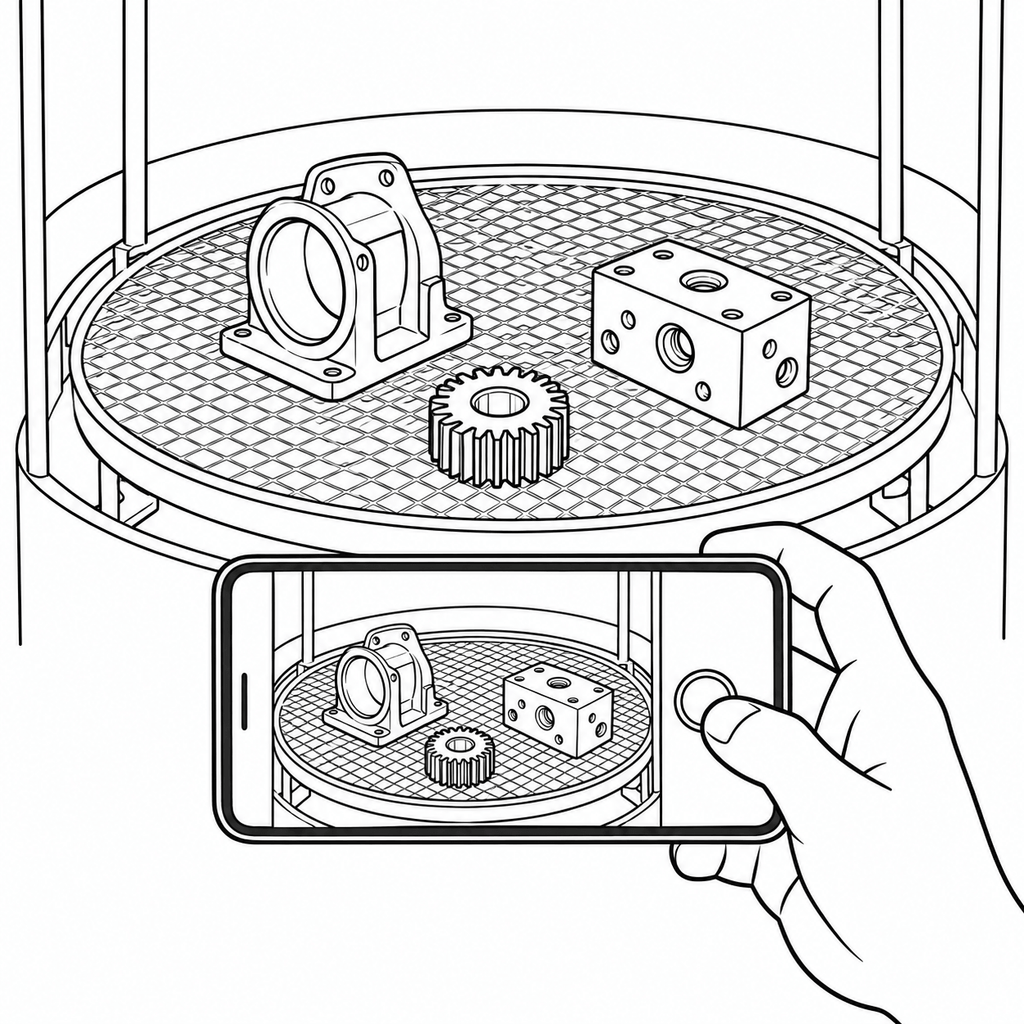
Need help with a difficult part? Contact Renegade with a photo of the part and how you’re loading it.