
Foam in a parts washer looks harmless at first. A little froth. A little fizz. Nothing dramatic. Then it starts climbing, spreading, overflowing, weakening spray coverage, and turning a normal wash cycle into a small shop-floor soap opera.
If your parts washer is foaming, the machine may not be the problem. Foam is usually a sign that something in the cleaning process needs attention.
Why Foam Shows Up in a Parts Washer
Foam usually does not arrive alone. It brings friends: wrong detergent concentration, contamination, heavy soil load, water conditions, and sometimes the wrong chemistry for the job.
In an aqueous parts washer, detergent, heat, spray pressure, soil, oil, and water all have to work together. When that balance gets knocked around, foam can start acting like it owns the place.
Common causes include:
- Too much detergent in the wash solution
- The wrong detergent for the washer or application
- Heavy oil, grease, coolant, or contamination in the tank
- Cold solution or inconsistent wash temperature
- Dirty solution that needs maintenance
- Parts carrying unexpected chemicals into the washer
- Excessive agitation or spray action with unstable chemistry
Foam is not random. It is feedback from the process. Annoying feedback, yes. But still feedback.
Why Foam Is More Than a Mess
Foam looks like a housekeeping issue. Sometimes it is. But it can also affect the way the washer performs.
Too much foam can:
- Reduce spray coverage
- Interfere with rinse stages
- Create overflow and cleanup problems
- Make the washer harder to monitor
- Cause inconsistent cleaning results
- Hide what is actually happening in the tank
A parts washer needs the solution to move, spray, carry soils away, and return to the tank in a controlled way. Foam gets in the middle of that process like a guy standing in the doorway during a parts delivery.
The Washer Usually Gets Blamed First
When foam gets out of hand, the washer often gets the side-eye.
But foaming is usually not a sign that the washer suddenly forgot how to wash. More often, it means the cleaning chemistry, solution condition, or maintenance routine needs a closer look.
That is why detergent matters. The right parts washer detergent should clean without creating new problems in the tank. The wrong setup can turn a normal cycle into a bubble machine with a job title.
Where Defoamer Fits
A parts washer defoamer helps control excess foam when the process needs a quick correction. It is especially useful when soil load varies, foam starts interfering with the wash, or the tank is getting a little too enthusiastic.
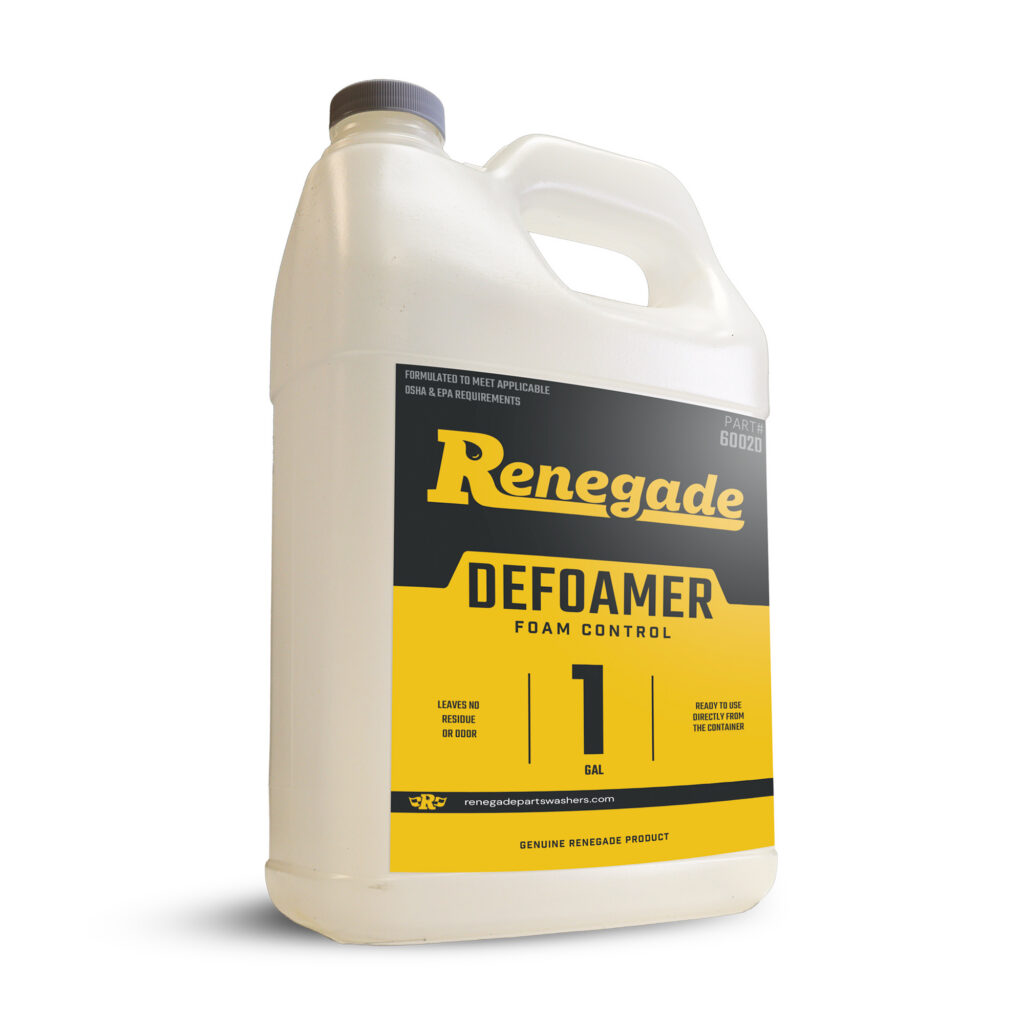
Renegade Defoamer is designed to help reduce foam in manual and automatic parts washers. Used correctly, it can help keep the wash cycle cleaner, calmer, and easier to manage.
But defoamer should not become a permanent cover-up for a bad process. If foam keeps coming back, something else is probably feeding it.
For more on Renegade cleaning chemistry, read Beyond Detergent: How Parts Washer Additives Improve Cleaning.
How to Get Foam Back Under Control
Foam control starts with figuring out why it showed up.
- Check detergent concentration. Too much detergent can create foam and residue issues.
- Look at the soil load. Heavy grease, oil, coolant, or other contaminants can change how the solution behaves.
- Check temperature. Cold or inconsistent solution can affect cleaning performance and detergent behavior.
- Inspect the tank. Dirty solution, sludge, and buildup can turn the wash process into a chemistry swamp.
- Use defoamer when needed. A little can help bring foam back under control.
- Review the detergent. Make sure the chemistry matches the machine, parts, and soils being cleaned.
If the same foam problem keeps returning, it is worth looking at the full cleaning process instead of just chasing bubbles around the tank.
Foam and Maintenance Go Together
Foam can be a sign that the washer needs maintenance, a solution change, better filtration, or a closer look at detergent use.
Routine parts washer maintenance helps keep the tank, nozzles, pumps, filters, and wash solution in better shape. A clean system gives detergent a better chance to do its job without turning the cabinet into a foam nightclub.
Filtration can also help by removing debris and solids from the wash solution. Learn more about how a parts washer filtration system supports cleaner solution and more consistent cleaning.
The Goal Is Boring Foam
The best foam is the foam nobody talks about because it is not causing problems.
Good cleaning should feel boring in the best possible way: same cycle, same result, fewer surprises. When foam starts making itself visible, messy, or expensive, it is time to check the process.
Foam control is not about chasing bubbles. It is about protecting the wash cycle, the machine, and the result.
Parts Washer Foaming FAQ
Why is my parts washer foaming?
Parts washer foaming can come from too much detergent, the wrong detergent, heavy soil load, contamination, dirty solution, water conditions, or inconsistent wash temperature.
Is foam bad in a parts washer?
Some foam may not be a major issue, but excessive foam can reduce spray coverage, cause overflow, interfere with rinse stages, and create inconsistent cleaning results.
How do you stop a parts washer from foaming?
Start by checking detergent concentration, solution condition, temperature, soil load, and maintenance. A parts washer defoamer can help control excess foam when needed.
What does parts washer defoamer do?
Parts washer defoamer helps reduce excess foam in the wash solution so the washer can run more predictably and with fewer overflow or spray coverage problems.
Can the wrong detergent cause foam?
Yes. The wrong detergent or incorrect concentration can cause foaming, residue, poor rinsing, and inconsistent cleaning performance.
Foam Taking Over the Tank?
Tell Renegade what you clean, what detergent you use, and what the foam is doing. We can help you look at the washer, chemistry, maintenance routine, and additive options.